01
One source of data.
Prices, products and customers live in one place, and the quote document comes out of it. No two files carry different numbers any more.
Business systems
Built around the process already running, one module at a time, until orders, inventory and production sit on a single source of truth.
While one person still remembers everything, notes are enough. Once the work passes through several hands, what gets lost is not the data but the agreement on which version is right.
Prices, products and customers live in one place, and the quote document comes out of it. No two files carry different numbers any more.
The office and the production floor read the same status at the same moment, so no job waits on an answer by phone.
The month-end summary is made of entries already recorded as the month ran, rather than copied together out of several files once it ends.
A worked example
Before
Quotes were built one at a time in spreadsheets, with a price list circulating in several versions. Order status could only be found by asking production directly, and the month-end summary was rebuilt from separate files.
What was built first
The first phase holds product data, customer data and the quotation module on one shared foundation. Quote documents come out of the system, and every figure in them comes from the same price list.
The phases after it
Inventory lands in the second phase, then work orders and production tracking, then delivery and installation, with employee data in the last. Each phase is used in the operation before the one after it begins, and is quoted as its own piece of work.
Modules
The list is an example rather than a limit. Each area is built and quoted as its own module, and an area specific to one business is added the same way.
Quotes are assembled from one product and price list, with a document ready to send, so no two files carry different prices.
Every order has a status that can be read without asking, from accepted to finished, with photo proof at the stages that need it.
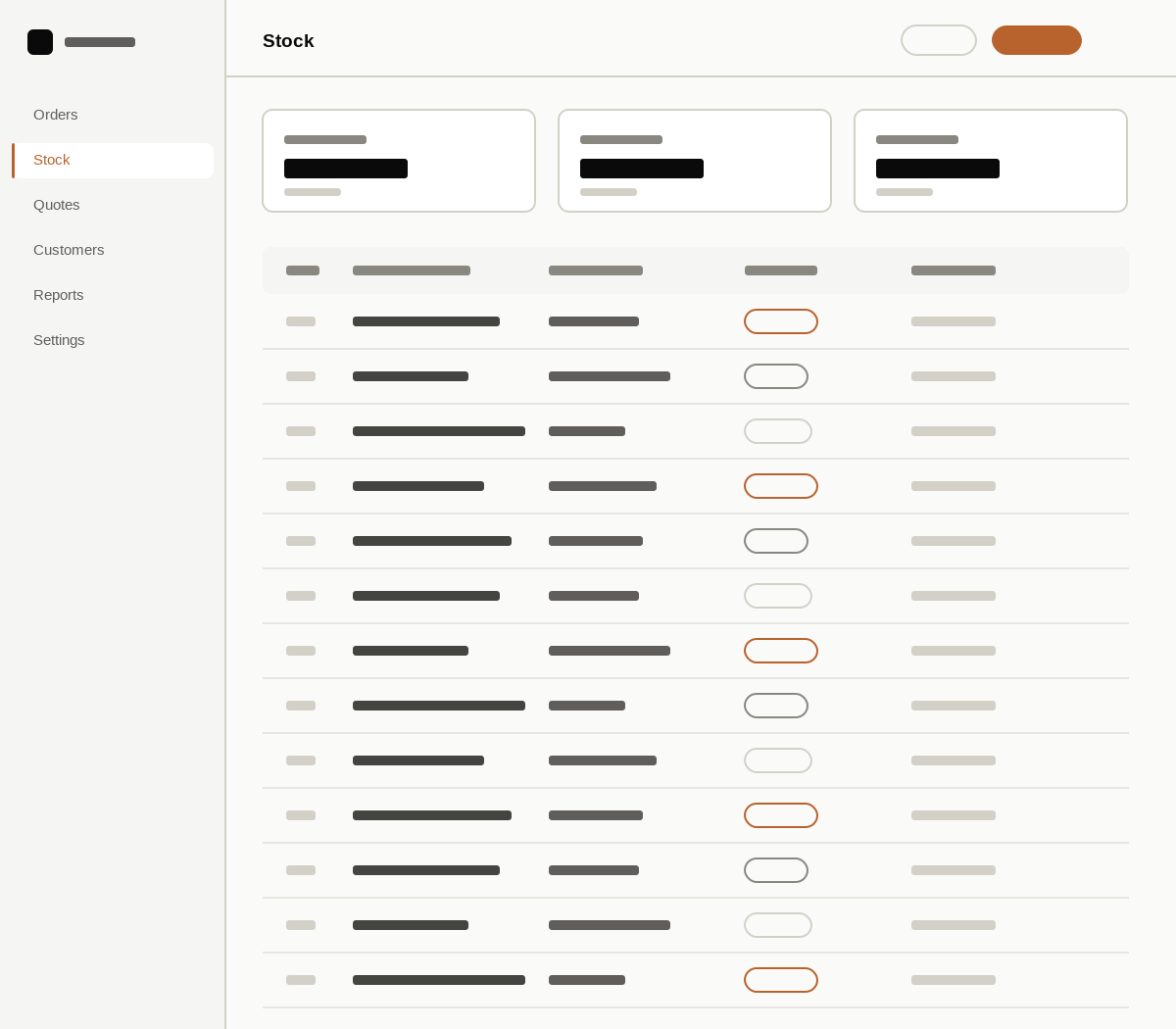
Material and finished goods are counted in one place, so purchasing and production stop running on estimates.
Tasks, delivery schedules and installations go out to the field team, and are reported back from the job itself.
Work that is ready to invoice and work already paid is marked inside the system, so finished jobs stop slipping past unbilled.
Each role sees only the part it is responsible for, and every change to the data is recorded with its time and its author.
A process that is not on this list is built the same way, following how that business already works.
The build order follows the most pressing need rather than the numbering of this list. Pricing is built per component, the same way as website work, starting at Rp14 million for a first module running in the operation, with later phases quoted separately.
Phasing
The process now running is written down as it is, including the parts still done by hand. What comes out of it is a list of modules, the order to build them in, and one total with the breakdown behind it.
The most pressing module is built first, tested on real data, then put into the operation. The team who will use it daily gets a short walkthrough.
Later modules are added to a system already in use, without taking it offline. Each phase is quoted separately and scheduled around readiness on the floor.
The system runs on Sonattra cloud or on the client's own server. Monthly maintenance covers monitoring, security updates, backups and repairs, for as long as the system is in use.
Questions
No. The work starts with the single most pressing module, and that module is useful on its own as soon as it is in use. Later phases are added to a running system and quoted as their own work, so the build can stop at the end of any phase without leaving a half-finished system.
Existing data is moved into the system, whatever shape it is in. The spreadsheets do not have to stop on day one either: usually they run alongside until the module replacing them has proven itself, and are then dropped on their own.
By default the system runs on Sonattra cloud. Where the data has to stay inside the company, it is installed on the client's own server as an option. Either way the system and its data belong to the client, and a copy of the data can be taken at any time.
The build is quoted per project and per phase. The monthly cost is maintenance and licence: monitoring, security updates, backups, and repairs when something breaks. It runs for as long as the system is in use, because software an operation depends on cannot be left unwatched.
It depends on the software and whether it offers a way in. Many common services do, some older packages do not. The real answer comes at the process review stage, once the list of what is in use is known, rather than being promised before seeing it.
An off-the-shelf system asks the business to fit its process to the software, and tends to stop exactly at the part that makes each business its own. This is the other way round: existing modules are the starting point, then they are fitted to the process already running. Where the need really is standard, off-the-shelf is cheaper, and that gets said plainly.
Tell us what you're building, we'll take it from there.
Start a project →